Hi, this is Gergely with a bonus, free issue of the Pragmatic Engineer Newsletter. In every issue, I cover Big Tech and startups through the lens of senior engineers and engineering leaders. Today, we cover one out of four topics from last week’s The Pulse issue. Full subscribers received the article below seven days ago. If you’ve been forwarded this email, you can subscribe here.
An interesting trend highlighted by The Wall Street Journal: companies want to hire for FDE roles, but devs are just not that interested:
“Job postings on Indeed grew more than 10-fold in 2025 compared with 2024. The number of public company transcripts mentioning the role jumped to 50 from eight over the same period, according to data from AlphaSense.
The only problem? Few engineers want the job, which has historically been seen as demanding, undesirable, and less prestigious than product-focused engineering roles.
“Everyone wants them and there’s only maybe 10% of the market that wants that role,” said Patrick Kellenberger, president and chief operating officer at Betts Recruiting.“
Last summer, we covered the rise of the FDE role, and looked into what it’s like. Back then, this is how I visualized what was then a very hot role:
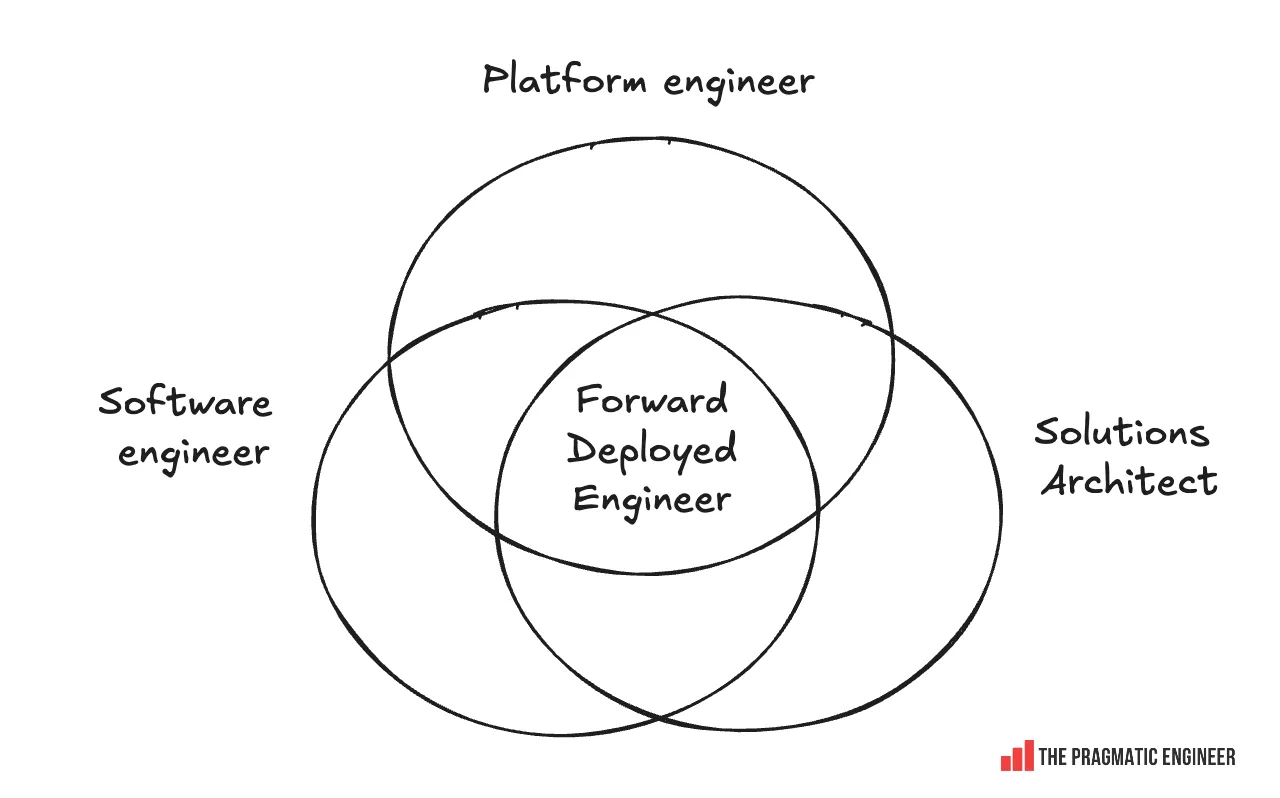
At the companies where I interviewed FDE folks – OpenAI and Ramp – the role seemed to live up to this visualization. However, I’ve since talked with two engineers who took FDE roles and were disappointed. This is how they saw it, in practice:
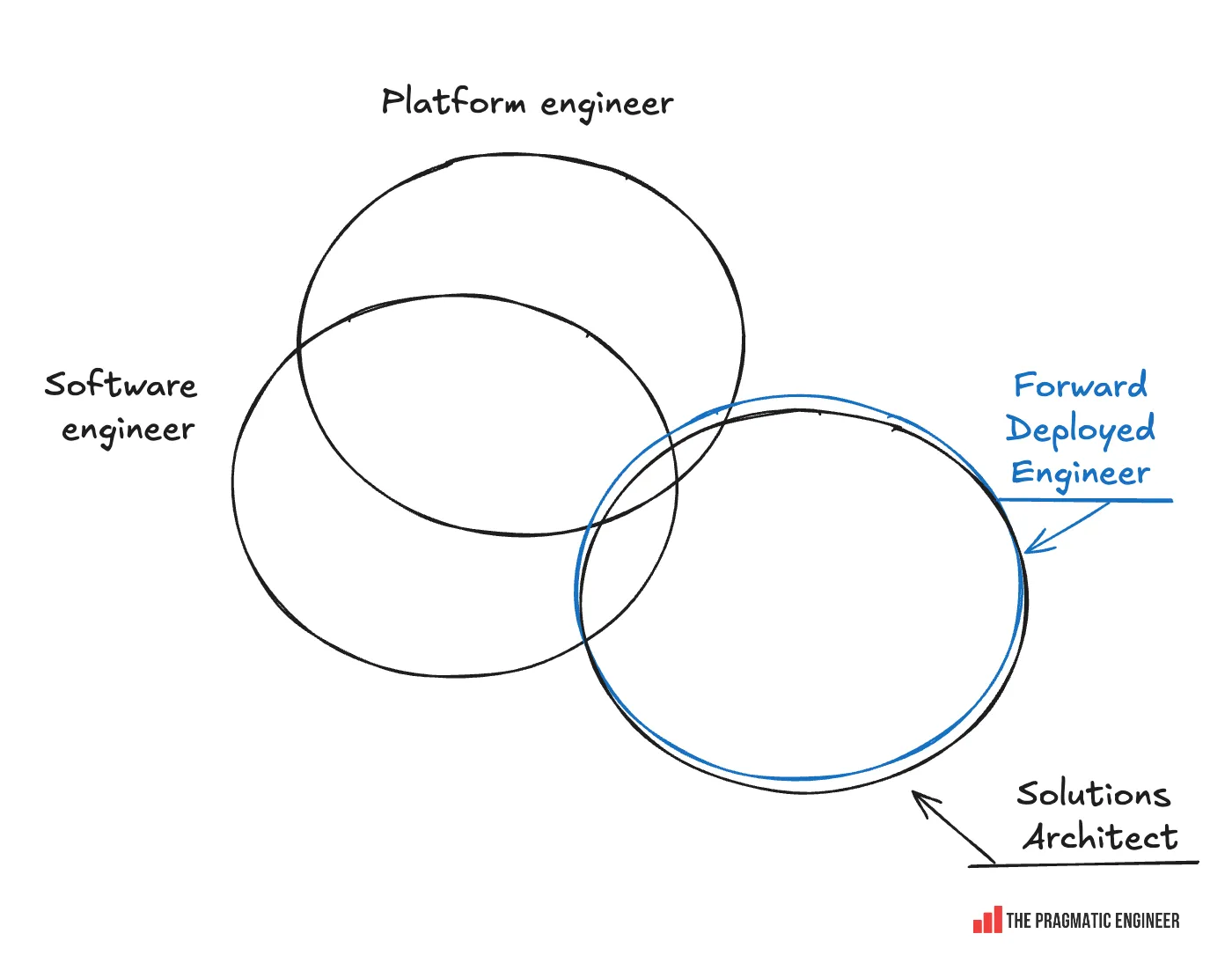
The role seems akin to a “sales engineer” where FDEs help close the deals, or a solutions engineer (or even consultant), where FDEs deploy to a customer to build them a solution. They don’t contribute back into the platform, and don’t do much that’s considered “software engineering” beyond integrating software which the product team built.
Some engineers figure out the nature of the role during the interview process and pass on it. Meanwhile, some others take the job and later quit. Here’s what a dev told me who accept an FDE role at a company, but didn’t find what they expected:
“This FDE job was a typical IT services mindset. The company wanted to use me more on the engagement lead side, and nothing on software development. It’s not what I signed up for, and I didn’t like the vibe and culture. I quit 4 weeks later.”
In today’s job market, if there’s high demand for a role which pays decently but attracts little interest from engineers, there’s always a reason!
Read the full issue of last week’s The Pulse, or check out this week’s The Pulse.
Catch up with recent The Pragmatic Engineer issues:
- Building WhatsApp with Jean Lee (podcast): Jean Lee, engineer #19 at WhatsApp, on scaling the app with a tiny team, the Facebook acquisition, and what it reveals about the future of engineering.
- The Pulse: What will the Staff Engineer role look like in 2027 and beyond? What happens to the Staff engineer role when agents write more code? Actually, they could be more in demand than ever!
- From IDEs to AI Agents with Steve Yegge (podcast): Steve Yegge on how AI is reshaping software engineering, the rise of “vibe coding,” and why developers must adapt to a rapidly changing craft.
Subscribe to my weekly newsletter to get articles like this in your inbox. It's a pretty good read - and the #1 tech newsletter on Substack.